
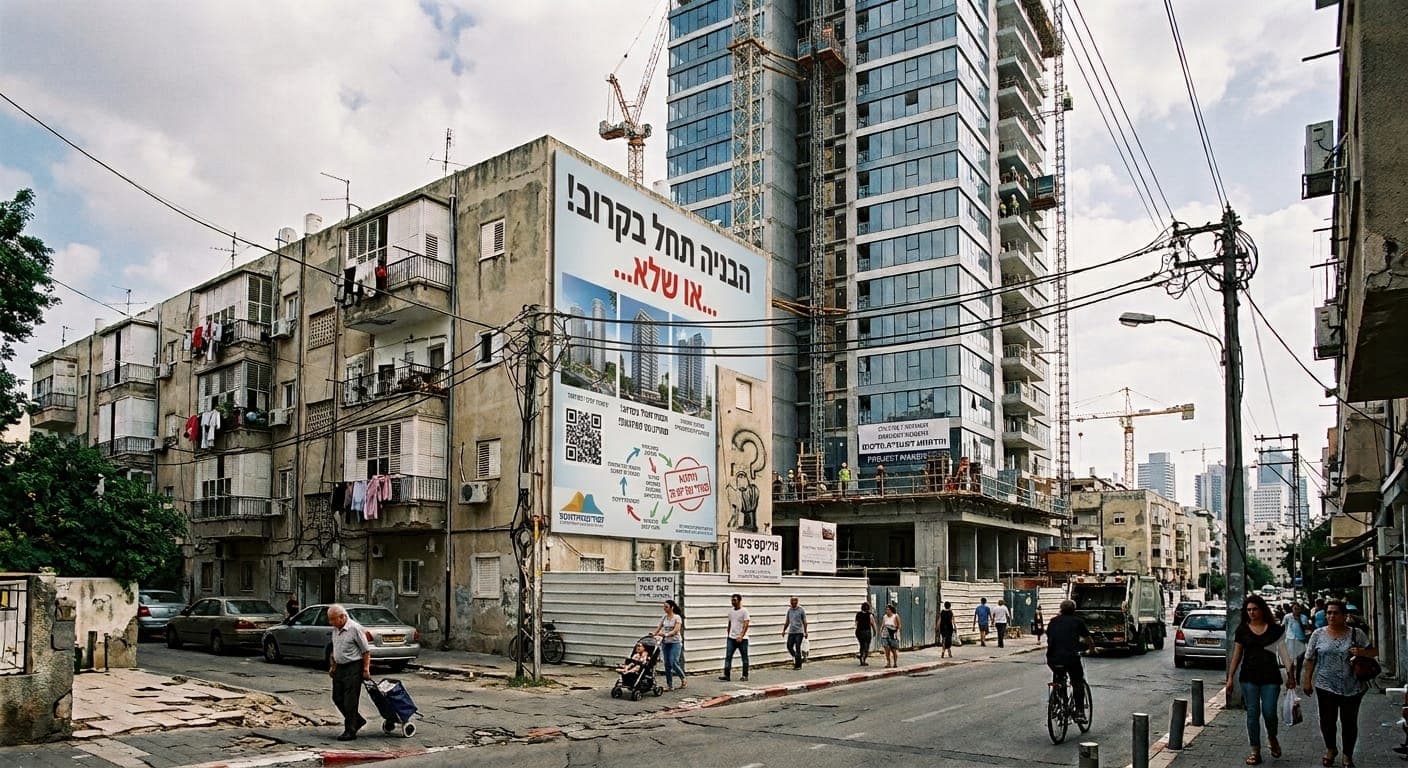
Urban Renewal in 2026: What's Changed for Tel Aviv Homeowners and Developers?
A look at the state of urban renewal in 2026: interest rates, construction costs, project pace, and what homeowners and developers should know before signing.
The state of urban renewal in 2026 is a mixed picture: quality projects backed by united homeowners and strong developers are moving forward, while projects built on promises alone are stalling or facing significant delays. The main reason is a combination of relatively high interest rates (even if trending downward), construction costs that have surged in recent years, and heightened caution among financial institutions and contractors. Anyone looking to enter such a process - whether as a homeowner or a buyer - needs to understand the full picture before signing anything.
Why Some Projects Move Forward While Others Stall
Not all urban renewal projects are created equal. The key difference between a project that progresses and one that stalls is the developer's financial strength and the equity they bring to the table. Large, established developers with access to bank financing and proven track records continue to advance deals even in a high interest rate environment - because they can absorb financing costs and price them in correctly from the start. Smaller developers, or projects that were 'locked in' during the near-zero interest rate era, when the economic assumptions were completely different, now find themselves needing to recalculate - and sometimes the project simply grinds to a halt.
Construction costs, which have risen significantly in recent years due to raw material prices, labor costs, and stricter standards, are another factor weighing on project viability. A developer who priced a project three years ago based on old construction costs may find today that their margin has eroded significantly - and this is exactly where flexibility is needed, sometimes including updated terms with homeowners.
Are Developers Still Rushing to Advance Projects Like Before?
The short answer: not with the same intensity, but definitely yes in the right locations. Developers today are far more selective. They carefully examine the property's location, the potential return per square meter, the state of urban planning, and the level of agreement among homeowners before investing resources in legal and planning support. Projects in sought-after Tel Aviv locations, with clear economic feasibility, still attract competition among developers. Meanwhile, more peripheral complexes, or ones with internal disagreements among residents, face real difficulty finding a suitable developer.
It's important to understand: the expected drop in interest rates, even if gradual, is already affecting market expectations. Many developers are waiting for the right moment to enter at greater scale, and in the meantime continue to advance only the financially strongest projects.
Opportunities and Challenges for Homeowners
For owners of existing apartments, urban renewal still represents a significant opportunity - receiving a new, often larger apartment, in a reinforced building with higher market value, without direct financial investment. However, the main challenge today is realistic expectations. Many homeowners still enter negotiations with expectations formed during the hot market period, and struggle to understand that the terms - whether apartment size, rental allowances during construction, or timelines - are directly affected by today's financing and construction conditions.
On the other hand, this is also a period when homeowners should be active and involved: checking the developer's financial stability, ensuring proper bank backing, and not settling for verbal promises. Professional advice at an early stage - both legal and from an appraiser - can save significant disappointment down the road.
How to Choose the Right Developer in the Current Period
In a period of high interest rates and shifting construction costs, choosing a developer is the most critical decision in the process. It's worth checking previous experience with similar projects, proven financial strength (not just promises), pre-approved bank backing, and a realistic, detailed timeline. A professional real estate agent familiar with the Tel Aviv property market can be a huge help at this stage - both in assessing the value of the existing property and in evaluating the offer against other alternatives in the market, including buying a new property instead of waiting for a developer.
Questions and Answers
Is it worth entering an urban renewal project in 2026?
Yes, but carefully and with thorough due diligence on the developer and the specific project. Not all projects are equal, and the difference between success and stagnation mainly depends on the developer's financial strength and the property's location.
Will falling interest rates affect the pace of projects?
A gradual drop in interest rates is expected to improve financing feasibility and encourage developers to take on more projects, but the full effect will be felt gradually rather than immediately.
Which is better - waiting for a renewal project or buying an existing apartment?
This is a personal decision that depends on timeline, budget, and willingness to wait. A conversation with an agent familiar with Tel Aviv properties can help you weigh both options wisely.
How do you know if a developer is reliable and financially stable?
Check previously completed successful projects, official bank backing, and financial reports where possible. Legal and professional support during negotiations is critical.
If you're a homeowner considering entering an urban renewal project, or interested in buying a property in Tel Aviv as an alternative, the Idan Real Estate team would be happy to guide you toward the right decision - with precise market analysis and personal support at every stage of the process.